


History of Baby Sign Language
Learn the history of Baby Sign Language, from it’s roots in a strange observation made by a 19th century linguist, through to mainstream acceptance in the 2000s.
- 1800s: William Dwight Whitney discovers children in deaf families outperforming hearing peers.
- 1980s: Dr. Joseph Garcia rediscovers BSL and starts teaching signing to hearing families.
- 1990s: Prof. Acredolo & Goodwyn’s research shows that BSL works and that there are enormous benefits.
- 2000s: BSL is gaining widespread acceptance as the evidence mounts.
1800s: Whitney’s Curious Observation
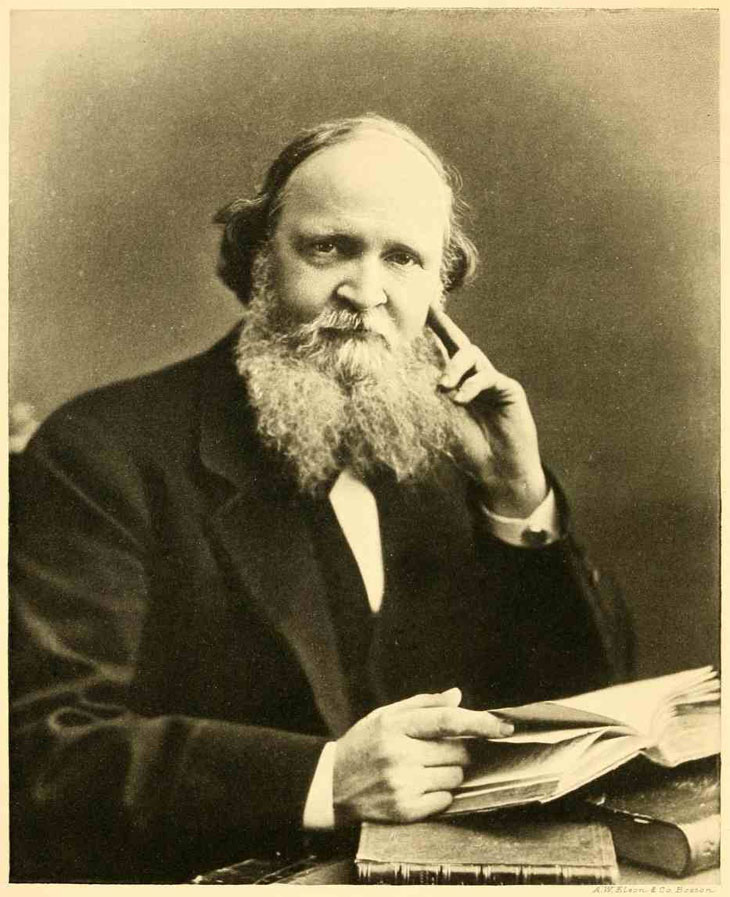
William Dwight Whitney made a curious observation: children of deaf parents are routinely communicating through sign language at 6 months – a year before children in hearing families.
Whitney, a 19th century linguist, was a professor at Yale and an writer of the now ubiquitous Webster’s dictionary. While studying the deaf community, he remarked on the superior communication abilities of their children. Despite having what people of the time considered the handicap of growing up in a deaf household, these children were making their hearing peers look slow.
Not only are children in deaf families communicating through sign language earlier, they have normal speaking trajectories. Despite having parents that do not speak, children in deaf families learn to speak at the regular age. Signing not only lets them communicate at a younger age, it also helps them learn to speak.
Whitney did not take it much further than that and this curiosity was left largely un-investigated for more than a century until it was rediscovered in the 1970s.
1980s: Rediscovery & First Steps
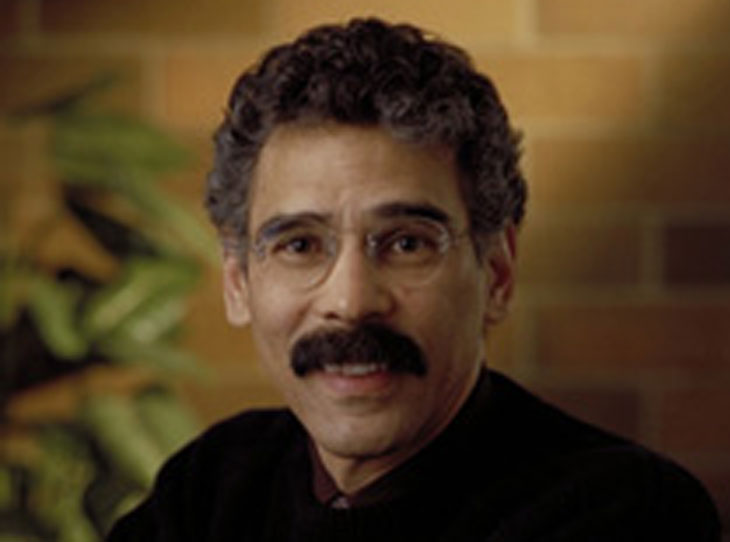
Dr. Joseph Garcia, then an ASL interpreter, was the first to take the next step. Dr. Garcia noticed that the children of his deaf friends were communicating with their parents at six months old using sign language and had substantial vocabularies at nine months old. This was also surprising to Dr. Garcia since most children don’t start saying their first few words until 12 months old and will still have a very small vocabulary at two years old. Dr. Garcia wrote about this phenomenon in his 1986 graduate thesis. Dr. Garcia began using sign language to teach the children of hearing parents and later started a company to teach baby sign language.
1990s: Research Findings Grow
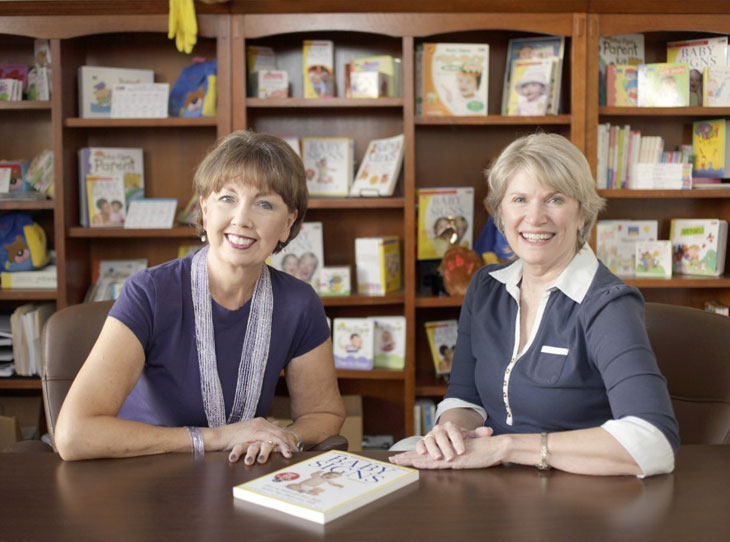
In the late 1980s, Professor Linda Acredolo noticed her daughter making rudimentary signs. Working with her research partner at the University of California (San Diego), Professor Susan Goodwyn, the pair began teaching the baby more formal signs.
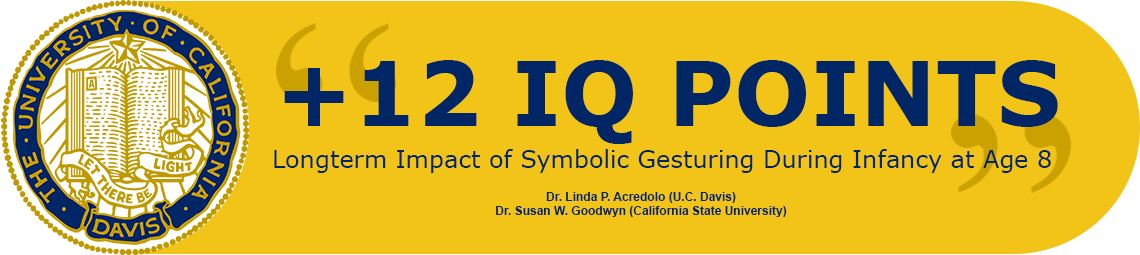
Acredolo and Goodwyn won a series of NIH grants to study Baby Sign Language. Over the next 20 years, Professor’s Acredolo and Goodwyn conducted the first comprehensive baby sign language research. Through a series of studies, they showed benefits including:
- Less frustration and a closer bond
- A larger speaking vocabulary
- 12 IQ point advantage
Acredolo & Goodwyn also started to push Baby Sign Language into the mainstream, starting a company to promote signing.
2000s: Going Mainstream
Through the 2000s, acceptance and use of baby sign language has continued to grow. In 2006, PBS began running the Signing Time series, further growing awareness of the benefits of Baby sign Language. And today signing is used by millions of families and has become an integral part of the program in many early childcare centers.
Baby Sign Language has also been winning praise from professionals, winning an endorsement by the American Academy of Pediatricians in the latest edition of their guide to infant care, Heading Home With Your Newborn.
This site, BabySignLanguage.com, was founded in 2010 to provide free access to Baby Sign Language. We have helped over 2,000,000 families in over 190 countries learn Baby Sign Language. We support this free website through the sale of Baby Sign Language kits. Thank you for your support.



Dictionary and flashcard links don’t work. Is the website down?
Thank you
Go to the Dictionary section of our website and go to the word you need. On that page you will find a video and a flash card.
Do your program use American Sign Language?
Yes our website and products use American Sign Language.
Hello,
I would like to cite this website for my assignment. Can you tell me the author and the year this was posted?
This site is very useful!
Many thanks
Hi,
Thanks for dropping by. Please check our copyright here to see the year we started this site. Since we also have had multiple authors build this site through the years, you may refer to this APA guide for referencing a site under no author. Cheers.
Who is it that wrote about the history of baby sign language?
ADMIN – Hi Tahnee,
The writing staff at http://www.babysignlanguage.com
Who is the artist, the illustrator?
ADMIN – Hi Kelly,
Non dominant hand is the canvas and the other hand is a full brush that swipes from top to bottom at chest height.
Who is the lady in the videos on the website?? She looks so familiar to me, but I can’t place her
ADMIN – Hi Joane,
Our founder, Lila.
Hi there,
I was wanting to know the name of the organization or company that runs this site. I cant seem to find any credentials or information.
Regards,
Brigit
ADMIN – Hi Brigit,
Our corporate name is http://www.babysignlanguage.com, just like the domain. We are ran and operated by a team of mothers and educators. If you need additional details please feel free to give us a call.
We used your baby sign language program with our son. We were amazed at how quickly he picked it up and how much relief it gave us to be able to communicate long before he could talk! It was wonderful! We even continued after he could talk and it really helped being able to have those non-verbal communication skills at times, like telling him to be gentle when getting to see a new baby, etc. without having to draw attention to him in a negative way in the group, etc. My son learned to read at a very young age and just tested in the 99% percentile for reading in his age group. I attribute so much of this to his early ability to comprehend language from using the baby sign language. He’s in 1st grade and his school tells me his the best reader in the whole K-5 school! I recommend your program to every new parent I meet, thank you so much for the lifelong gifts your program has given us!
My Mommy and Daddy can hear you can speak he is 23 years old and says 3 words he is so happy has an good time vocabulary. I
have been so great for teaching his sign language to remember, who gonna be this could be talking he isn’t talking so good, but when the sign language phrase, that will be happy but additional signs to his website when the boy sign I can say did you eat your Hamburger or I ate the hamburger, My Boy told did say with the sign a word Hamburger & eat In ASL This Year For the video clip
or next year ?
Hi I am currently writing a Thesis on BSL and also had a friend order me the Deluxe Kit. It’s awesome! Great work! I was wondering if you could tell me the source of your information regarding the history of BSL in order to cite properly. Thank you!
ADMIN – Hi Stephanie,
There isn’t a single good source for the history of Baby Sign Language. We cobbled together the history by taking the individual stories of Whitney, Garcia, Acredolo, & Goodwyn, as well as looking at the early research papers written by the same.
I am a grandmother of 2 boys, we taught the 3 yr old basics like please, thankyou, more, all done, baby, dog… The baby is now 21 months, and is in speech therapy. 6 months ago we were told he was 70% deaf, now they say he has perfect hearing. Other tests are being done to identify the issues with speech. It took him alot longer to catch on to the signs than my kids or his brother. HE is now putting together 2 sings at a time like more & milk when he hands me his cup. I’m so greatful for sites like this one. There is always more to learn.
Thanks,
Thank you so much for this wonderful site. I am a new Grandma, and I am excited to learn the signs for myself and my Granddaughter. I wish I would have known about this for my own children, but better late than never. I especially love the videos, since it is sometimes hard to figure out from photos in books and the written word. Thank you so much.
I have a 20 month old son an he does not talk. He is in speech therpy but I do not see a change in him. A am just getting started with signing an i hope it helps him
I just found your site last night. I have taken 2 years of ASL, but it was so many years ago I felt really rusty. My son is only 3 and a half months old, I have been signing with him for the past two weeks. Your site and it’s video has really helped jog my memory and boost my confidence. Thanks you so very much for all of your efforts. I look forward to the day my son starts signing back to me. Also to my vocabulary to be ready for his expansion. It will keep the words coming! Thanks again.
My daughter can hear, but cannot speak. She is 22 months and says two words. She, however, has an extensive vocabulary. I have been teaching her signs to allow her to communicate, expecting that soon she would be talking. She is still not talking, but when we use additional baby signs from your website, she is pleased that she can communicate with us. She is now looking for signs for many things. I can say to her “where is the rabbit?” She will find the rabbit and point to it. She can not ask us “where is my rabbit?” I have taken a year of ASL in college and so has my husband, but we are rusty. The video clips of the words are a wonderful help to us. We teach her words as they come up. Her vocabulary is growing faster than we can remember or find the words. To be able to choose a word and see it signed by a person in a video clip is especially helpful. I love what you are doing, and would love to see more signs – actually, all of them! Good work. I will continue to monitor this website and share this discovery with others.
ADMIN – Hi Teresa,
We will be adding about 800 new words in the next few months. They have been shot and are currently in post-production.
B
I was wondering if you could tell me if there is specific baby sign language for different languages or dialects or if it is the same across the globe. Thanks
ADMIN – Hi Martha,
In the deaf community, there are lots of different sign languages with different gestures and different syntax. For example the Brits use British Sign Language.
In the baby sign language community, most people use American Sign Language (this is what is here on this site) because there are more resources available. You can use any sign language you like with your kids, just pick one and be consistent.